Enrollment Strategy


By Angela Brown, Head of Marketing
Since July 1, 2026, anyone starting a new program is planning without Grad PLUS, which makes this the first full recruitment cycle where every new prospect is crunching a different set of numbers.
Your prospects will ask what that means for their program, and the answer is a frustrating "it depends." Which federal limit a prospect gets depends on how the Department of Education labels the degree, and a court has put part of that definition on hold. So give each prospect a specific funding answer early, and keep your program pages leading with quality.
What changed on July 1, 2026
New borrowers can no longer take out Grad PLUS loans, and federal graduate borrowing now has caps. The Department of Education eliminated the Grad PLUS program and set new limits for loans made on or after July 1, 2026, according to its fact sheet on the final rule.
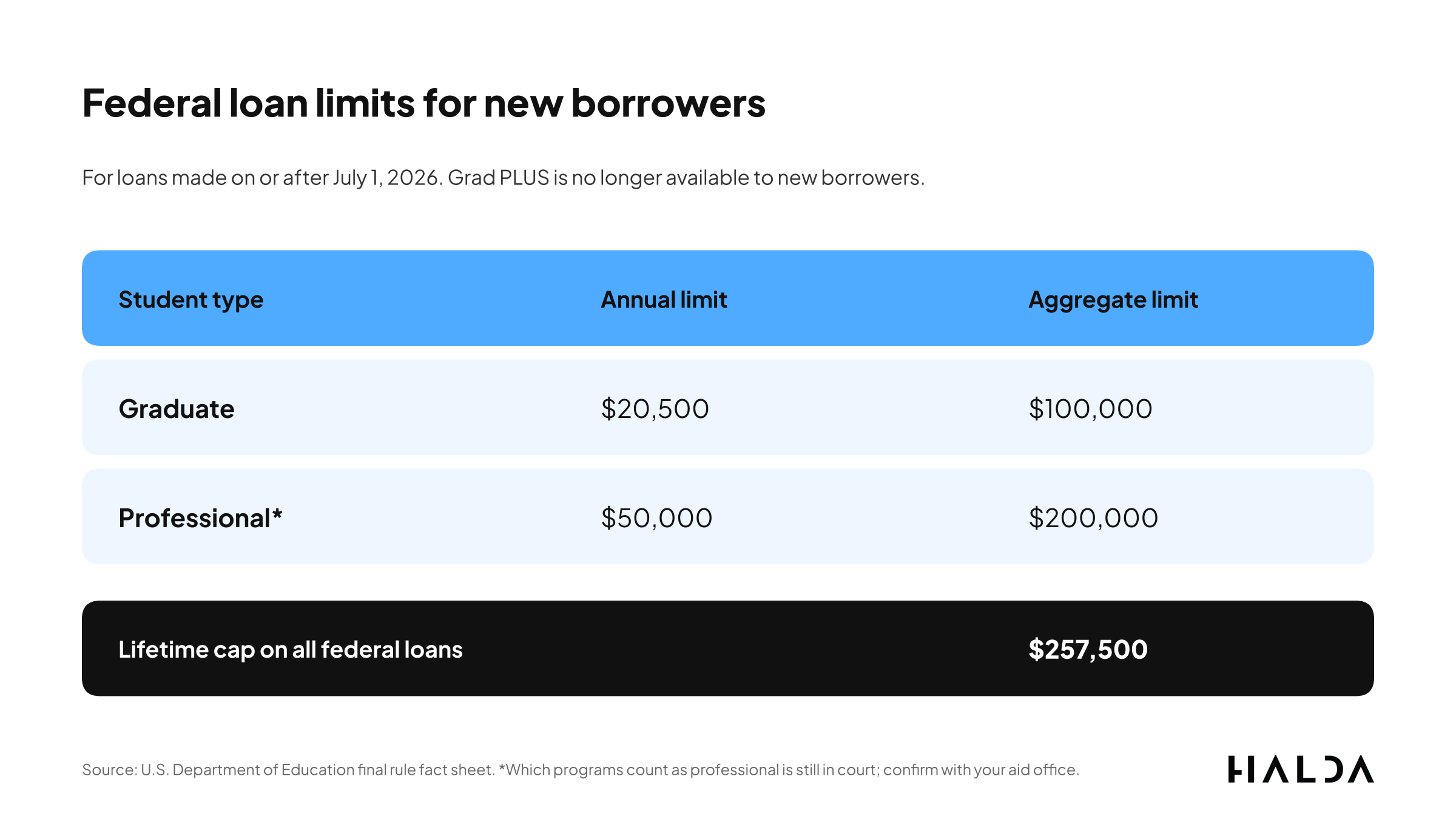
Every borrower also has a $257,500 lifetime cap on federal loans. The department notes that the cap counts Grad PLUS and leaves out Parent PLUS.
Three details change what you tell prospects:
- Current students keep their access. Borrowers who were already enrolled and had a federal loan for their program before July 1 can keep borrowing under the old limits. That lasts for three years or the time left in the program, whichever is shorter, and only while they stay continuously enrolled. A new prospect doesn't get that, and neither does a current student who transfers or starts a different program.
- Part-time students get less. Schools now have to cut annual loan eligibility for anyone enrolled less than full time, and that hits working adults hardest.
- The professional limit depends on the program, and the definition is still being fought over. A federal court stayed the department's narrower definition of "professional degree" on June 24, and the department published an interim list that includes some nursing programs. Many programs aren't on the interim list, and the cases were still moving through the courts as of late September. The Grad PLUS elimination itself wasn't part of the stay.
So don't quote a limit for a program until your financial aid office confirms which one applies.
Keep quality at the top of the page
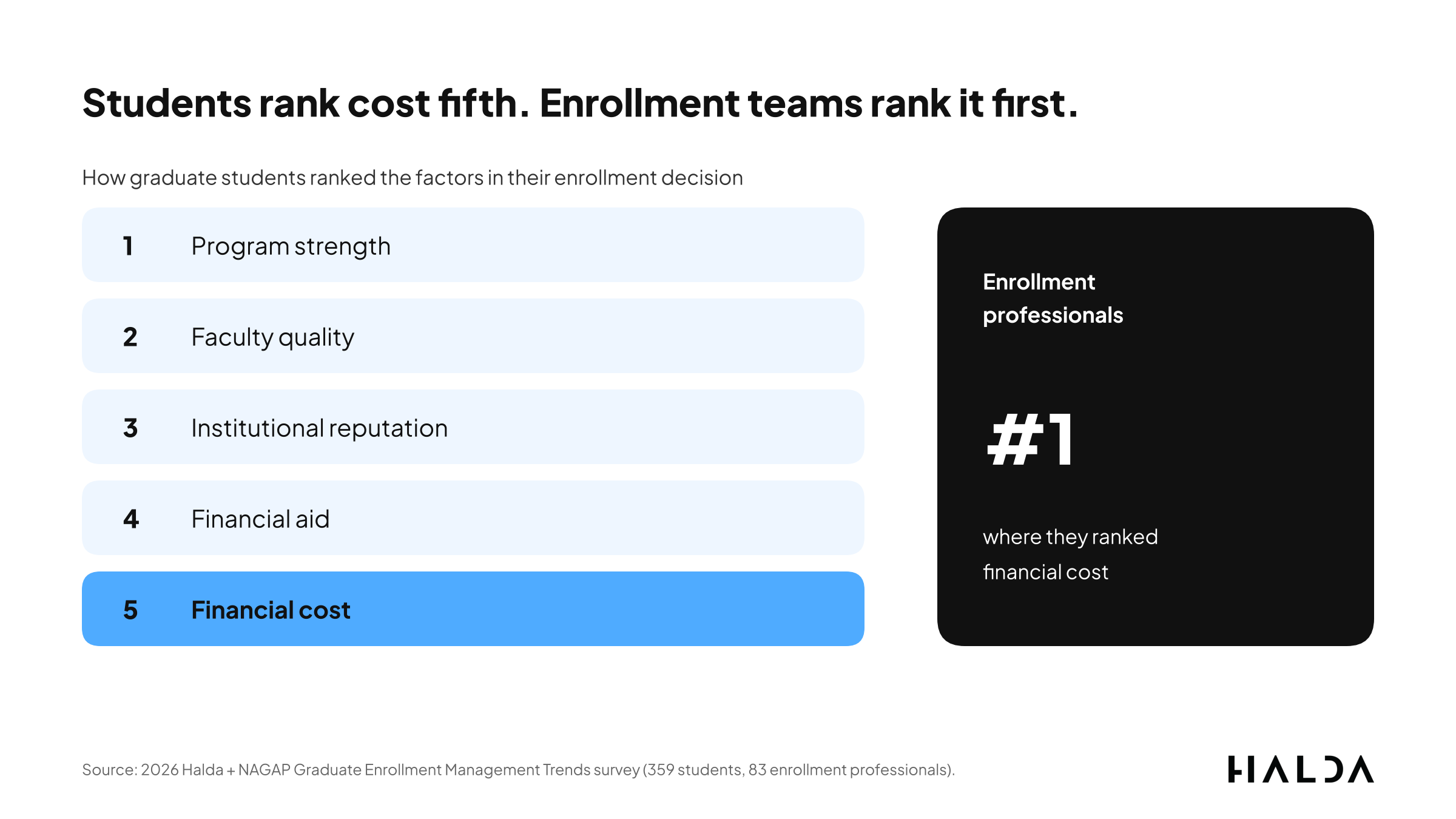
Funding anxiety makes it tempting to put cost at the top of every program page, but that points your message at the fifth thing prospects care about. In Halda's 2026 Graduate Enrollment Study, students ranked program strength, faculty quality and institutional reputation first through third and cost fifth, while the enrollment professionals surveyed ranked cost first, as we covered in our graduate enrollment trends post.
Our post on why working adults leave grad program pages covers the page itself: program substance first, then cost stated plainly.
Rankings can move when the rules change, so check them against your own inquiry and application data this cycle.
Until your data says otherwise, quality stays the headline, and the funding answer belongs in the conversation.
How to give each prospect a funding answer early
Keep the page about the program and make the funding answer personal. Each step below gives a prospect a number that fits their program instead of a generic aid page.
1. Sort your programs by the limit that likely applies. Give counselors a one-page cheat sheet with each program, whether your financial aid office treats it as graduate or professional, the annual limit and any part-time reduction. Nursing programs on the department's interim list count as professional for now, while plenty of other programs aren't on the interim list, so your aid office has to sign off before any number reaches a prospect.
2. Ask about funding in the first conversation. A quick question on your inquiry form or in your first chat reply about how they plan to pay (employer assistance, savings, loans or an assistantship) tells you what to say next. Someone counting on employer help needs a different message than someone paying out of pocket, and our graduate recruitment strategy guide argues that employer tuition assistance now carries more of the load for working adults.
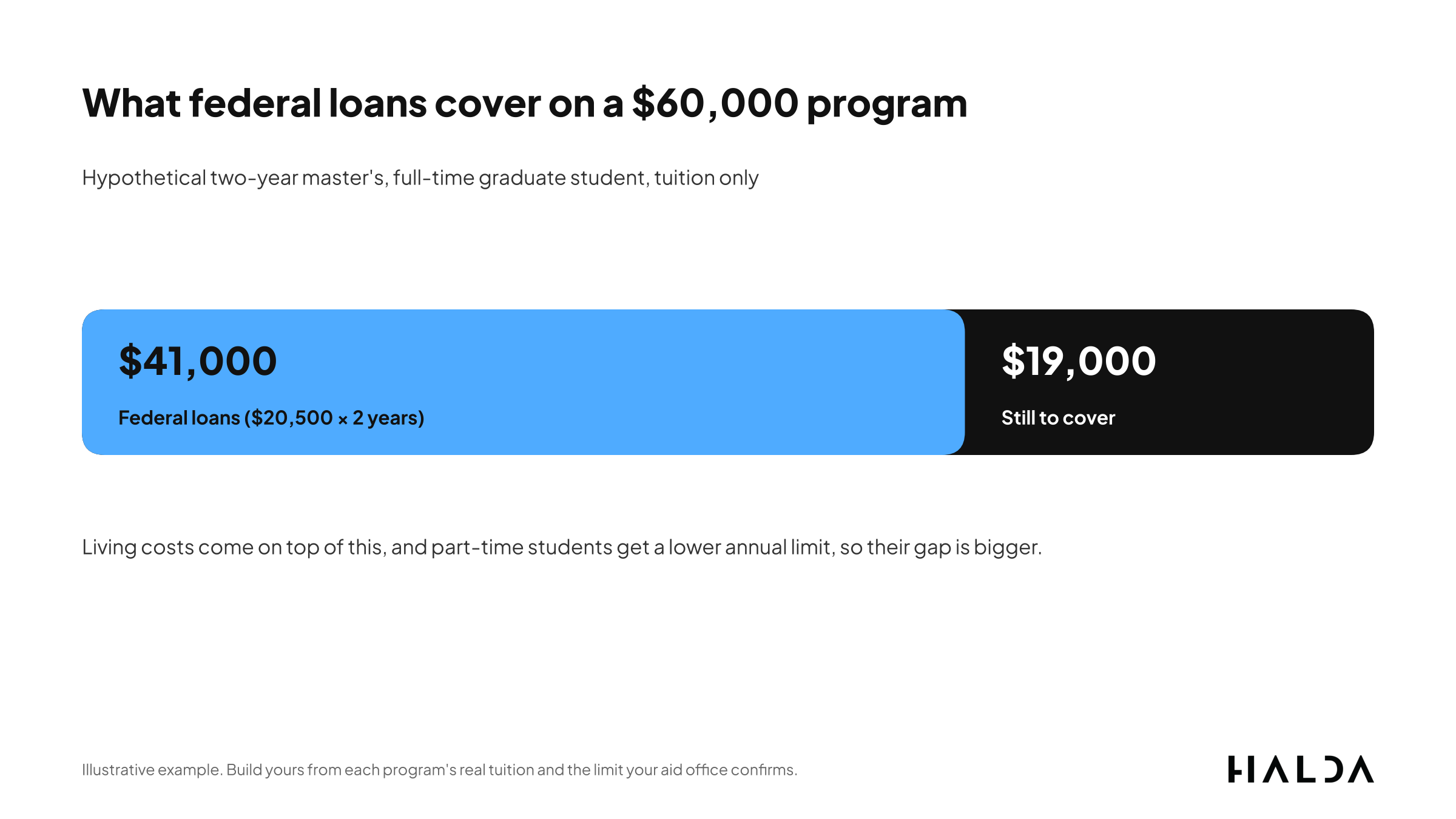
3. Do the math for each prospect. Say a two-year master's program costs $60,000 in tuition. A full-time graduate student can borrow up to $20,500 a year in federal loans. That's $41,000 over two years, which leaves $19,000 to cover another way before living costs even enter the picture. Part-time students get a lower annual figure, so their remainder is bigger. A prospect who sees that number on day one can plan around it, and one who first sees it at the financial aid stage may decide the program isn't realistic and look elsewhere. This example is hypothetical, so build yours from each program's real numbers.

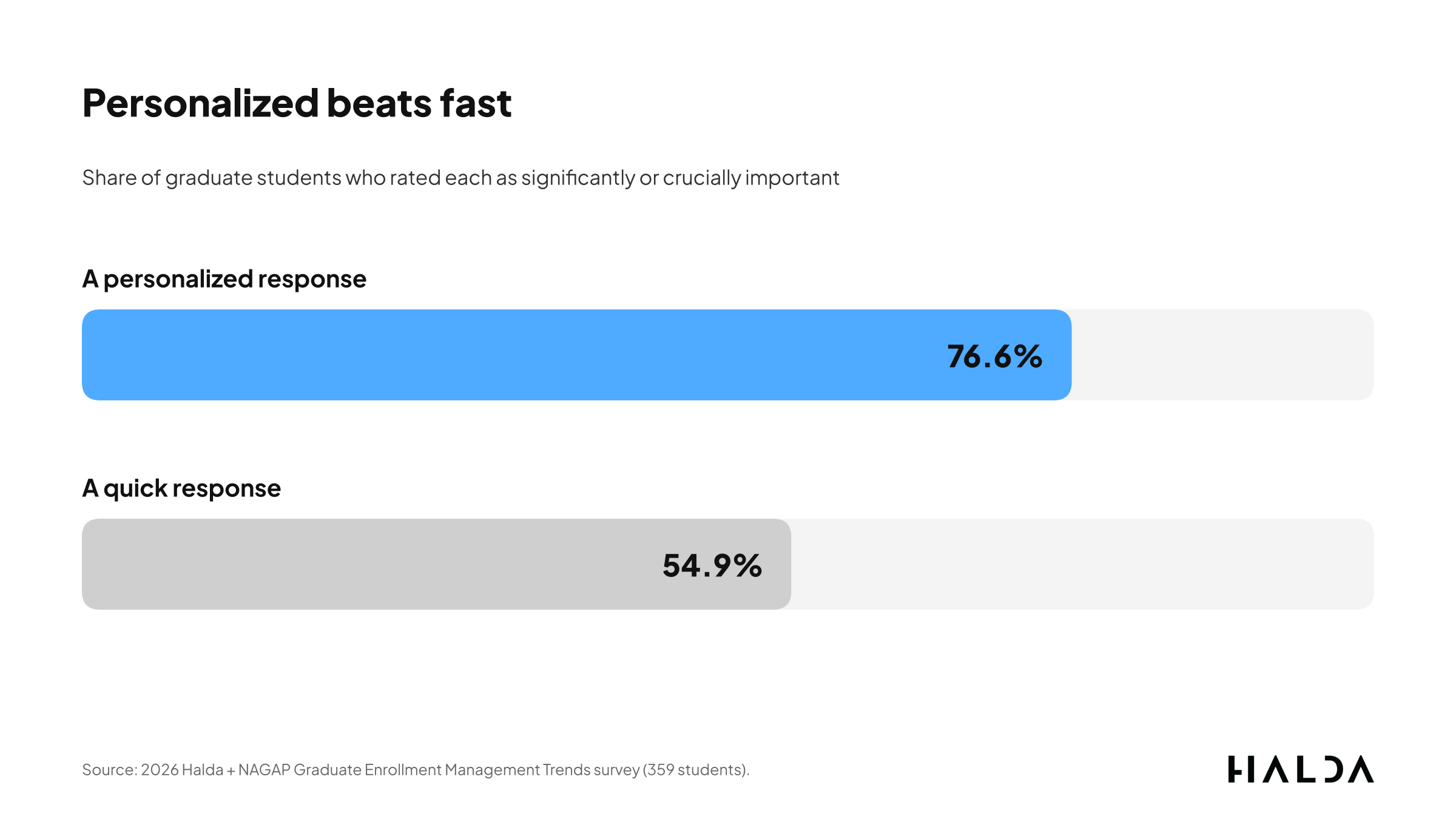
4. Follow up before the question holds up the application. In the study, 76.6% of students rated a personalized response as significantly or crucially important, compared with 54.9% for a quick response, and the strategy guide cites an average wait of 3.6 days for a reply. Our spring-start follow-up post lays out a four-week plan that works back from the application deadline.
Halda helps graduate enrollment teams do this at scale. It learns from every interaction a prospect has with your website, emails, texts and voice conversations, so each follow-up builds on what that prospect has already told you. A prospect who mentions employer tuition assistance in a chat can get a reply about that specifically, instead of a generic aid page.
Grad PLUS questions enrollment teams are asking
Can new graduate students still borrow Grad PLUS?
No. New borrowers can't take out Grad PLUS loans as of July 1, 2026. Students who were already enrolled in a program and had taken a federal loan for it before that date can keep borrowing under the old limits. That lasts for three years or the time left in the program, whichever is shorter, and only while they stay continuously enrolled.
How much can graduate students borrow in federal loans now?
Graduate students can borrow up to $20,500 a year and $100,000 in total. Professional students can borrow up to $50,000 a year and $200,000 in total. A $257,500 lifetime cap also applies to borrowers who receive loans on or after July 1, 2026.
Do part-time students get the full annual limit?
No. Schools must reduce annual loan eligibility for students enrolled less than full time, so a part-time student can borrow less than the annual limit. Your financial aid office can confirm the exact reduction for each program.
Which graduate programs count as professional?
The answer is unsettled. A federal court stayed the Department of Education's narrower definition of a professional degree on June 24, 2026, and the department's interim list includes some nursing programs. Many programs aren't on it, so confirm with your financial aid office before you quote a limit.
Should enrollment teams lead with cost now?
Cost shouldn't be the headline. In Halda's 2026 Graduate Enrollment Study, students ranked program strength, faculty quality and institutional reputation above it. Lead with quality and give each prospect an early, specific answer on funding.
Want to see how Halda gets funding answers to graduate prospects early, so your counselors can spend their time on the conversations that matter? Request a demo.

________________
As Halda’s Head of Marketing, Angela Brown brings more than 15 years of experience leading marketing and content teams in education and B2B SaaS. When she isn’t at her computer, you can find her reading, watching a true crime documentary, or driving her son to basketball practice.