Enrollment Strategy

By Angela Brown, Head of Marketing
The three highest-converting campaigns our partners ran last cycle have one thing in common: each one gave the student an answer before it asked for a phone number, email address or blood type (we’re kidding about that last one).
A merit scholarship calculator at Siena University converted at 8.55% and produced over 5,000 inquiries. A scholarship calculator at Spring Hill College brought in eight enrolled students during the final 30 days of the cycle. A pre-college form at the University of Vermont told the marketing team which courses to advertise and which months to spend in.
None of those campaigns started with "first name, last name, email." That is the pattern, and it held up across a public flagship division, a private Catholic college in the Deep South and a Division I private in upstate New York.
Here is what each team built, what it returned and what they would tell you to steal.
Siena University: a merit scholarship calculator that converted at 8.55%
Andrew Murphy, director of marketing at Siena University, has been a Halda partner since 2022. His team runs Halda across undergraduate and graduate admissions at the same time, feeding two separate Slate instances from one set of forms.
Siena's admissions counselors spend September through November on the road. Historically, every college fair, high school visit and financial aid night ended the same way, with a paper inquiry card. Last cycle the team replaced the card with a printed piece that pointed families to a merit scholarship calculator built as a Halda form and embedded on siena.edu.
Families got an aid estimate. Siena got 5,100 inquiries from 59,500 visits, an 8.55% conversion rate, all flowing into Slate and into the fall funnel.
"We knew affordability was critical to our families. Instead of just filling out an inquiry form on paper and pen, we did a merit scholarship calculator, and that's what we used as an inquiry generator at college fairs." — Andrew Murphy, Siena University
Why it works: The form answers the question the family already came to the website with. Siena still collects name, email and date of birth by the end of it. The difference is that the student gets something in the exchange, so more of them finish.
Two more results from the same playbook:
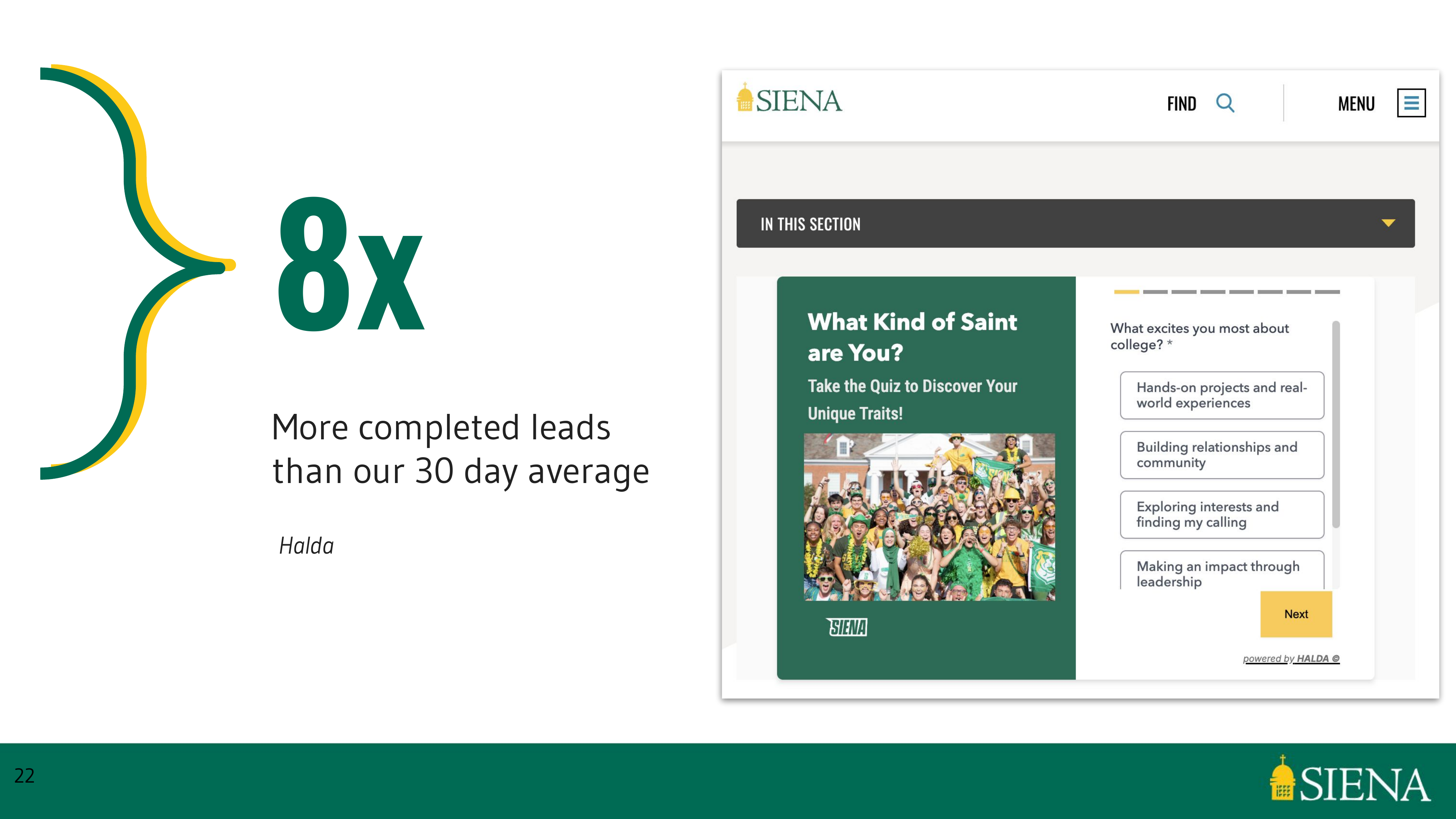
- During March Madness, Siena pointed the surge of traffic from its matchup against Duke to a Halda form instead of a standard request-for-information (RFI) form. That single day produced 8x more completed leads than the 30-day average.
- Siena publishes more than 50 content cards across its .edu domain, each targeted with recommended logic. One card shows only to prospective graduate students who have looked at teacher education programs or registered for related events. Visit registrations and attendance are up 40%.
Andrew tags every content card link with a UTM code, which enables him to follow a student from the card to the event to the enrollment. That’s the part enrollment leaders keep asking us for, and it is worth saying clearly: the credit lands on the student record, not in a vendor dashboard.
Spring Hill College: eight enrollments in the last 30 days of the cycle
Arlene Cash, vice president for enrollment and marketing at Spring Hill College, was in her first year as a Halda partner and 20 students short of her class in early August.
Between Aug. 9 and the Aug. 28 enrollment deadline, Halda generated 88 inquiries at Spring Hill. Twenty-three applied. Fifteen were admitted, all 15 completed their applications, nine confirmed and eight enrolled. Forty-three of those 88 inquiries came through the scholarship calculator alone.
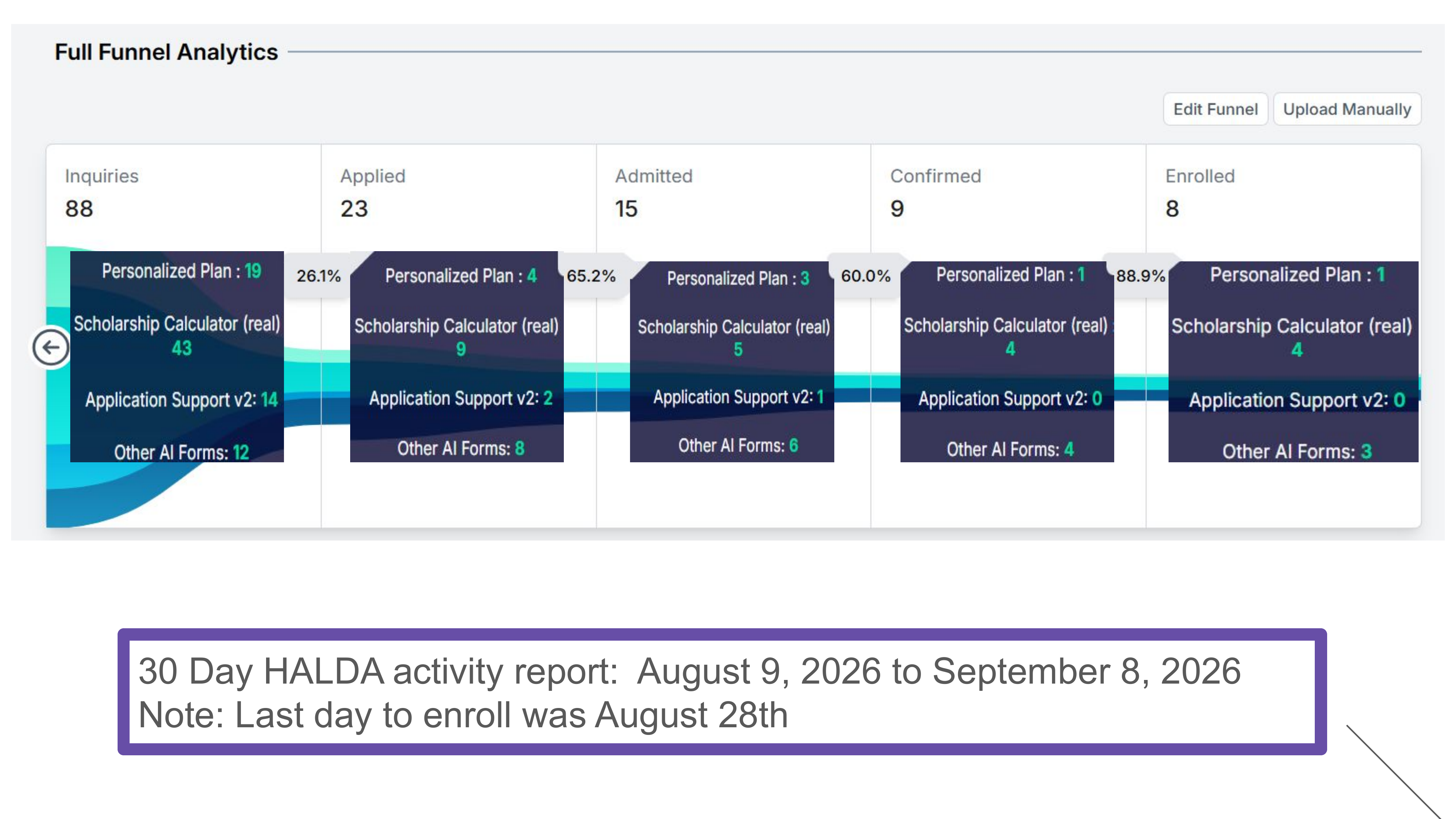
Eight students in three weeks may sound modest until you look at where they landed. Spring Hill's non-athlete cohort was the target group and the one under pressure. All eight Halda students were non-athletes, which made them 13.1% of Spring Hill's non-athlete enrollment.
"That calculator has been a godsend to us, because we have been known to be unaffordable. So many students are saying, 'I didn't know you had that kind of money. I did not know you had that kind of aid available.'" — Arlene Cash, Spring Hill College
Why it works: Nothing here is automated end to end. Spring Hill runs what the team calls a Halda hour, one hour every day when every admissions counselor works the queue of AI-curated notes from the night before and responds.
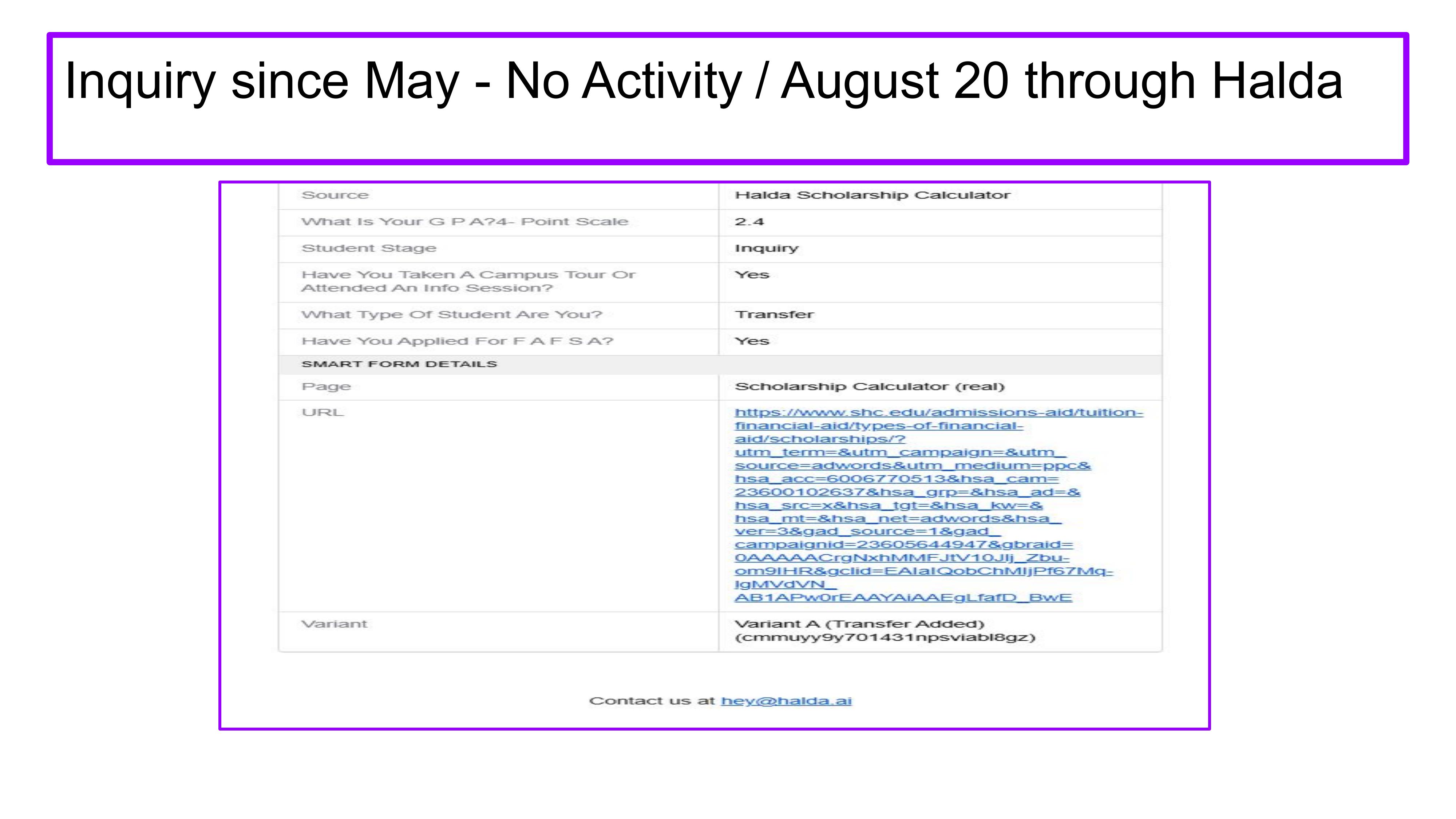
One of the eight came in as a transfer student who had inquired in May and then gone silent for three months. On Aug. 10 he filled out a Halda form. A counselor saw him in the Halda hour that day and reached out immediately. Transcripts arrived two days later. He was admitted the day after that, and he enrolled.
Spring Hill is now using Halda records to identify which high schools will be represented at upcoming college fairs, so counselors can reach those students before the fair rather than after it.
University of Vermont: a pre-college form that rewrote the marketing calendar
Nicole L'Huillier-Fenton leads marketing and the enrollment team for University of Vermont Professional and Continuing Education. Her portfolio runs from non-degree, certificates to lifelong learning, so the standard personalized plan form was never going to fit. She launched a pre-college form instead, aimed at high school students and their parents.
High school sophomores do not fill out RFI forms. Nicole's team built something closer to an Instagram quiz, opened it by asking whether the visitor was the student or the parent and branched from there.
The conversions matter, but what the answers taught UVM matters more.
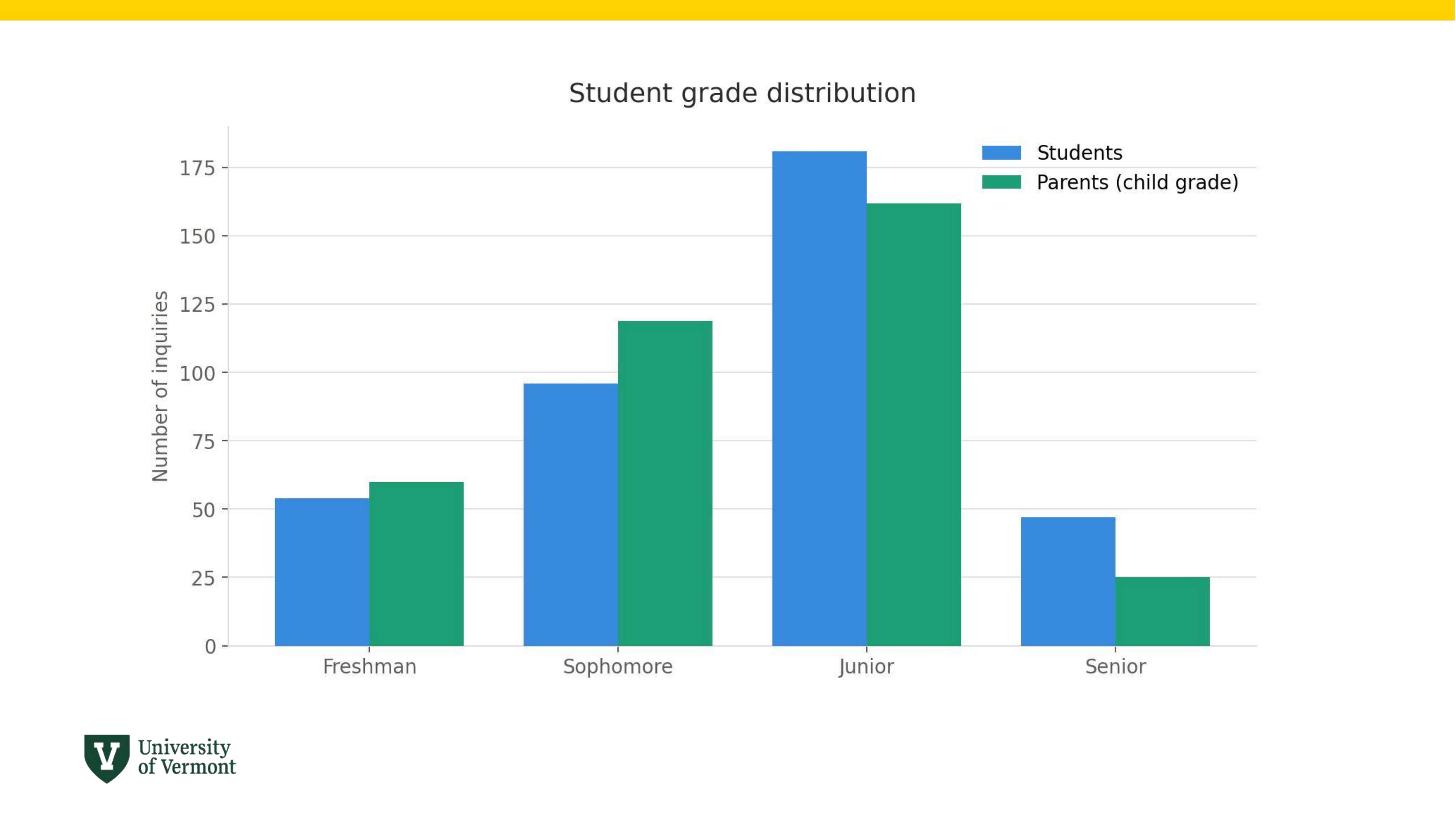
Juniors are the audience, not sophomores. Junior-year students submitted 181 inquiries, nearly double the sophomore count and almost 4x the senior count. UVM had plans to extend their marketing to a younger audience but decided to switch the outreach for younger students to a focus on parents, rather than students.
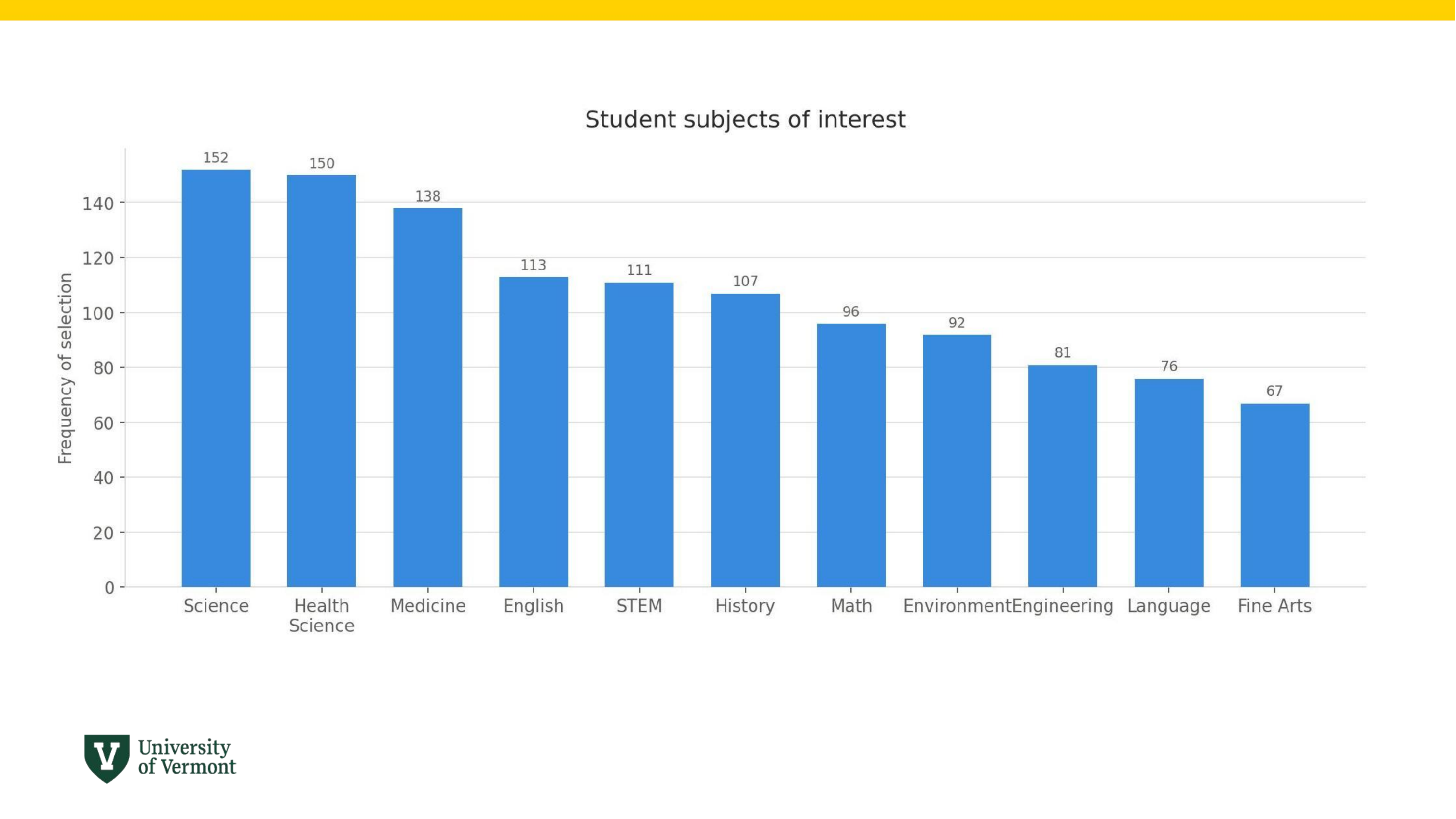
Students want science. UVM's pre-college copy had been leaning on courses in English, creative writing and social sciences, the courses that feel accessible to a high schooler. Students ranked science first at 152 selections, health science second at 150 and medicine third at 138. Fine arts finished last at 67. The team rebuilt its trending "hot list" emails around the sciences.
Students and parents want different things. Asked what excites them about a pre-college program, students chose learning cool subjects (27%) just ahead of gaining college credits now (26%). Parents were not close: 37% picked career exploration as the most important opportunity, and 40% named exploring academic passions as what they were most excited about. Same program, two different headlines.
Summer pre-college inquiries start in November. Volume runs 27 inquiries in October and 129 in February. UVM took that curve to its paid media vendors and moved the budget.
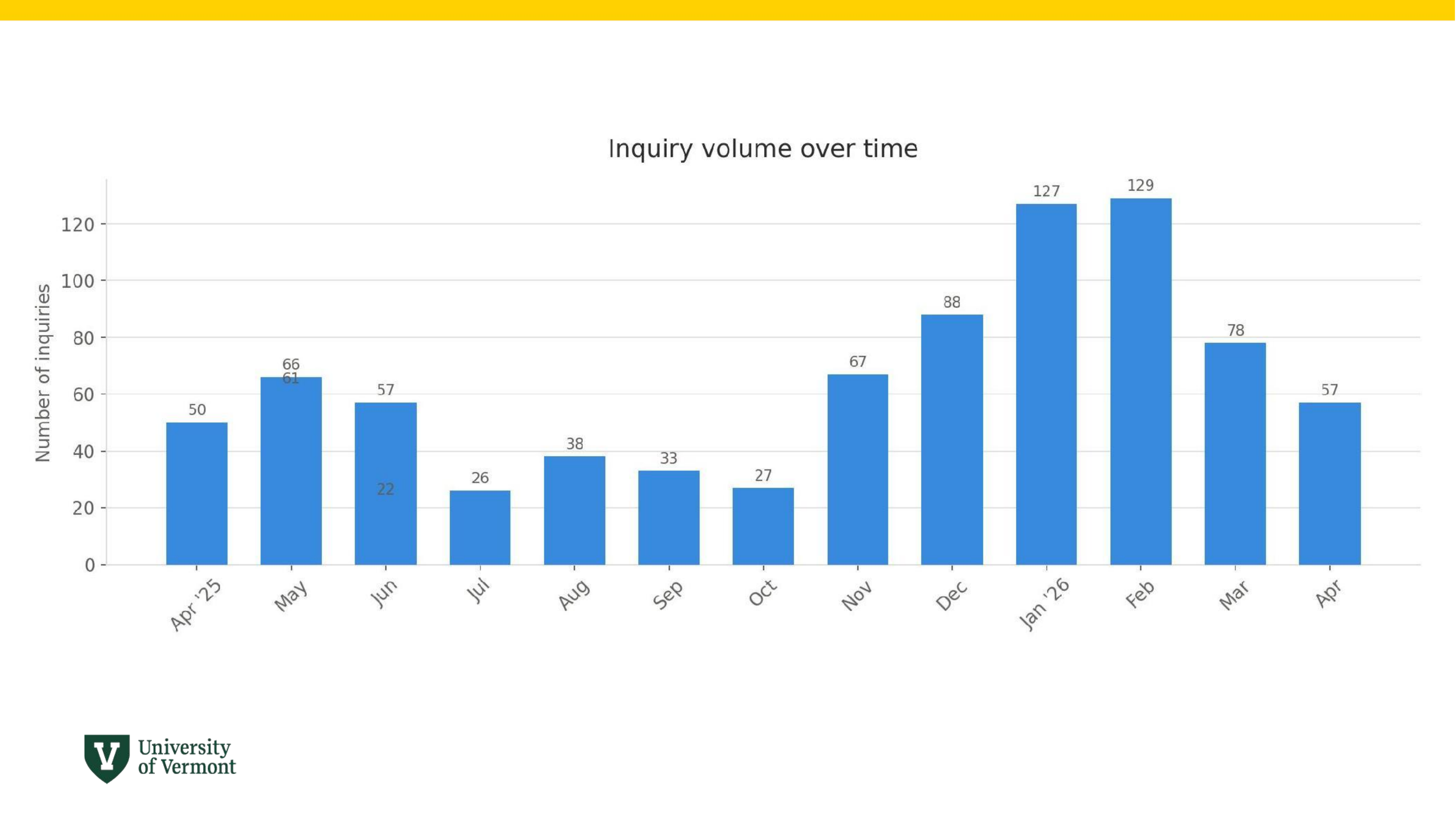
"The volume of inquiries that come in for our pre-college programs start as early as November. We had previously seen it more concentrated in the spring, but the Halda data was telling us a different story." — Nicole L'Huillier-Fenton, University of Vermont
Why it works: Nicole spent the summer analyzing 14 months of form data, then relaunched a shorter version of the form, cut the repetitive questions and is working on splitting the content on the pre-college program pages into a parent track and a student track.
The pattern across all three
These three very different institutions had very different challenges, and the same design decision at the center of every campaign. Two other things turned that decision into enrolled students.
Trade value for information. An aid estimate, a personalized plan, a quiz result. Every one of these teams found that a form offering something to the student converted better than a form asking for something. Siena has the cleanest side-by-side: its merit scholarship calculator converts at 8.55% while its general personalized plan form converts at 0.4%.
What students say changes what the institution says next. UVM rewrote ad copy, email content and media flighting off form answers. Siena confirmed that affordability drives its market and built the calculator around it. Halda keeps that context on the student record so the next message reflects the last one.
Attribution lands in the CRM. Siena runs two Slate instances off one form set. Spring Hill runs on Salesforce. Arlene's team can name the eight students they gained through Halda. Andrew can trace a graduate prospect from a content card to a webinar registration to an enrollment. Halda works alongside the CRM you already have instead of asking you to move off it.
Common questions
Does Halda require a CRM? No. Halda works with Slate, Salesforce and other CRMs, and it also runs at institutions that don’t have one at all.
What is a merit scholarship calculator in this context? It is a form on the institution's own website that gives a prospective student a personalized aid estimate based on what they enter, and creates an inquiry record at the same time. Siena built theirs as a Halda form on siena.edu and used it as the primary inquiry generator during fall travel.
How fast can a form like this be live? Most institutions are live within 90 days. Siena and UVM both started with a single form and expanded as they learned what their audiences responded to.
Your takeaway
You don’t need a new channel to convert more students. You can do it with one form that gives a family something worth their information, running on a page they already visit, writing back to the system your counselors already open every morning.
Spring Hill found eight students in three weeks with that. UVM found its entire spring media calendar.
.png)
________________
As Halda’s Head of Marketing, Angela Brown brings more than 15 years of experience leading marketing and content teams in education and B2B SaaS. When she isn’t at her computer, you can find her reading, watching a true crime documentary, or driving her son to basketball practice.