K-12


By Angela Brown
There's a lot of energy right now around AI chatbots for school websites, and some of that energy makes sense. A well-configured chatbot can answer "what's the tuition?" at 11 p.m. on a Sunday so a tired parent doesn't have to wait until Monday. That's genuinely useful.
The catch is that a chatbot only helps the family who already showed up to your website.
What about the family who attended your open house six weeks ago, started an inquiry, and disappeared? What about the accepted student whose parents have three more questions before they'll commit? Or the committed family that hasn't registered for revisit day because nobody followed up?
None of them are coming back to your site to ask a chatbot anything, and your chatbot can't reach them.
What chatbots do well
Let's be honest about these tools before we critique them. Chatbots earn their place in a school's communications stack as a front-end service layer.
A good school chatbot handles the repetitive stuff: answering FAQs at any hour, helping families locate deadlines and application links, routing inquiries to the right staff member and cutting down the volume of basic questions landing in your admissions inbox. Many school admissions teams are already using AI to answer parent questions with chatbots and reduce workload, which means adoption is growing in admissions operations even if it isn't yet the channel families prefer (we’ll come back to that).
For a small admissions team managing a full inquiry pipeline, that workload reduction matters. And for a parent who lands on your site at after hours wondering about financial aid eligibility, an instant answer beats waiting until 8 a.m.
The problem shows up when the conversation ends, and the family walks away.
Where families are when they decide
Picture where a prospective parent is when they're weighing whether to enroll their child. They're not necessarily sitting at a desk reading your website. They might be in the carpool line, half-watching their phone, or answering their child’s question about why should we go to this school anyway.
Parents respond best to fast, personalized, action-oriented communication, with SMS and email doing most of the conversion work. A chatbot sitting on a web page they're not visiting doesn't reach any of them.
SMS is the strongest channel for nudges like visit reminders, deposit deadlines, application steps and summer updates, because schools can personalize texts by student status and families tend to read them quickly. That's the channel that moves people.
Email is better for richer content: program details, financial aid explanations and multistep enrollment instructions. Families who want to compare options or understand something complex will read a well-timed email.
Voice is still valuable for high-stakes or relationship-driven moments, especially when staff need to walk a family through an aid package, next steps or a complicated situation.
A chatbot doesn't do any of that. It waits.
The difference between reactive and proactive outreach
A chatbot is reactive. It responds when a family initiates contact. That makes it a support tool, and that's the right description for it.
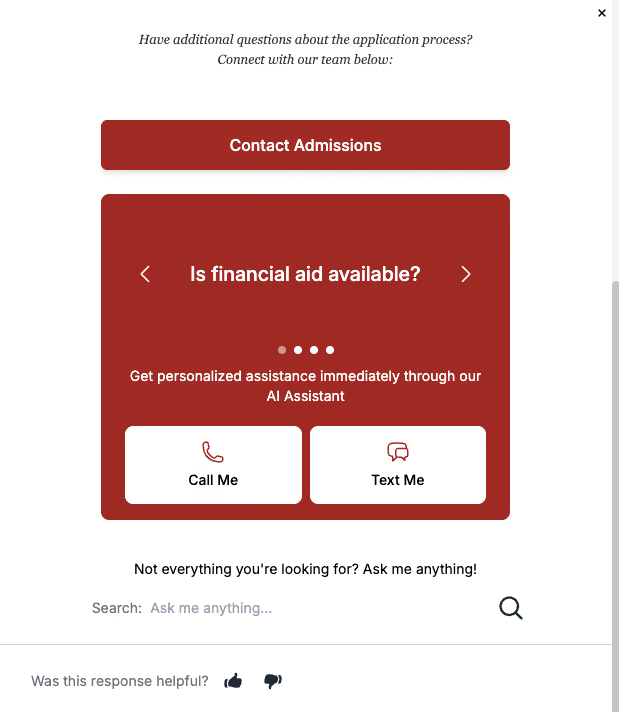
Enrollment requires something that can do both: answer a question the moment a family asks it, and follow up when a family goes quiet. After a prospective parent completes a brief onboarding form on a school’s website, Halda's Always-On Campaign Agent personalizes the experience for each prospective family across every channel they use: website, email, phone, and SMS, and it maintains context across all of those channels so a family that starts a conversation on the web can pick it up over text without starting over.
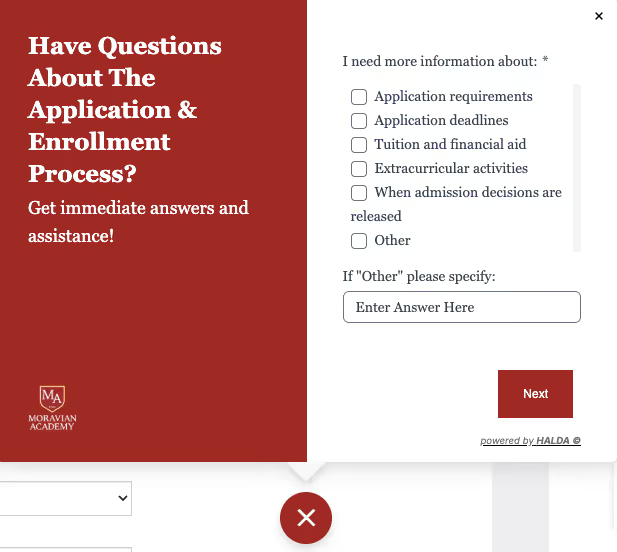
That last part matters more than it sounds. A parent who has to re-explain their situation every time they switch channels will disengage. A parent who gets a text that picks up exactly where the website conversation left off feels like the school truly knows them.
K-12 admissions teams can be overloaded. Manually tracking every inquiry that went cold or every accepted family that's ghosting isn't realistic. The tools worth investing in are the ones that make outreach happen automatically, triggered by where each family is in the process.
A practical channel breakdown
If you're thinking about AI tools for your admissions operation, it helps to match the tool to the job:
SMS: Deadline reminders, deposit follow-up, event attendance confirmation and any time-sensitive message where a delay can cost you a family.
Email: Program information, financial aid detail, enrollment instructions and content that requires more than 160 characters to be useful.
Voice: Financial aid conversations and high-touch situations where a family needs a real person, not a message.
Chatbot: Instant Q&A for families already on your site, after-hours support and routing families to the right next step.
Notice where the chatbot sits. It’s one piece. It’s a useful piece, but it doesn't carry your enrollment funnel on its own, and positioning it as your primary AI investment leaves most of the work undone. You don’t need to replace your chatbot, but adding a layer that operates across every channel a family uses is something to think about.
What "always on" should really mean
The pitch for chatbots often includes some version of "it's always available." That's true, in a narrow way. It's available when someone comes to your site.
An always-on enrollment system deploys by reading your existing website content, no new knowledge bases required, and most schools are live within a week. From there, it follows the family. It answers questions in real time. It allows you to send a meaningful follow-up when a family completes an inquiry but doesn't take the next step. It reaches out when an admitted student is approaching a deadline.
No one on your team has to remember to do any of it. The system knows where each family is and what they need to hear next, and it carries that context whether the family last engaged on your website, via text or through email.
That's what separates a support tool from an enrollment tool. One answers questions. The other moves families forward.
________________
As Halda’s Director of Marketing, Angela Brown brings more than 15 years of experience leading marketing and content teams in education and B2B SaaS. When she isn’t at her computer, you can find her reading, watching a true crime documentary, or driving her son to basketball practice.