Enrollment Strategy
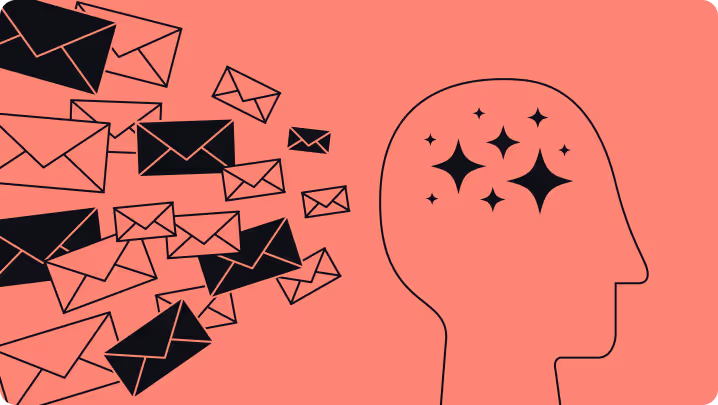

Between Dec. 20 and Jan. 5, your prospective students aren't thinking about FAFSA forms or campus tours. They are thinking about cookies, sleep, and avoiding their weird uncle at dinner.
This is Holiday Distraction Syndrome (HDS), the annual collapse of email effectiveness, where open rates plummet and your carefully crafted drip campaigns scream into the void. The instinct is often to go dark and wait for the new year, or worse, double down and spam inboxes out of desperation. Both are mistakes. You don’t need to shout louder; you need to whisper smarter.
But we have the antidote to HDS. Actually, we have 10. Let’s get into it.
1. Diagnose, Don’t Default
Don’t guess. Measure. Before reacting, pull a two-year baseline of your institution’s holiday performance: open rates, CTOR, page visits, and conversion patterns. Then segment by intent:
- High intent: Recently visited pricing, financial aid, or application pages.
- Medium intent: Engaged with email or SMS in the past 30 days.
Low intent: Dormant or cold leads.
Factor in parents as their own cohort. They often engage more during the holidays, especially on affordability.
This is your attribution baseline. Use it to prove what moved the needle in January.
2. Stop Throwing Email at the Problem
If email is the only tool in your box, you’re in trouble during the holidays. It’s time to optimize your channel mix.
Prioritize short, direct channels. SMS, push notifications, and messenger/chat are key right now. For your VIP prospects, consider targeted direct mail. We’re serious; a physical card stands out when digital inboxes are overflowing with “holiday sale” spam.
Map every audience segment to a primary and backup channel. High-intent students might get an SMS, while parents get an email coupled with a postal touch. But still, respect the frequency: fewer, higher-value touches win every time.
3. Nail Your Tone and Timing: Be Short, Human, and Helpful
Don’t nag. Nobody wants reminders about deadlines on Christmas Eve. Be helpful and festive without pressure.
Swap the long-form newsletter for a 15–30-second video, a single-image card, or a one- to two-line SMS. Shift your tone from urgent (“Apply now!”) to helpful (“Where are you getting stuck?”).
Optimize your send times for light-consumption windows. Evenings, late afternoons, and weekends are prime time for holiday scrolling.
Copy tip: Instead of “Read our full guide,” try: “Only got 30 seconds? We’ll show you what matters for next steps.”
4. Personalization That Pushes People Off the Fence
Generic “Happy Holidays” blasts are fodder for the digital landfill for this audience. Make every touch feel like you remembered the individual, not just the segment.
Use intent signals to drive micro-offers. If a student has been looking at dorms, show them a quick campus life video. If a parent is looking at the tuition page, offer a quick ROI or affordability checklist. Tailor the CTA to the role and use dynamic content so a single message adjusts based on interest.
5. Build Micro-actions Instead of Long Drips
Speaking of micro-actions, the holidays are for snacking, not five-course meals. Offer low-effort steps that keep things moving without demanding a huge mental load.
Here are a few examples:
- Schedule a 15-minute counselor call for after the break.
- Take an instant virtual tour.
- Download a one-page finance checklist.
- RSVP to a “bring a friend” event.
Audit your funnel, find three friction points, and convert them into single-click flows.
6. Pause, Prune, and Refire Your Comm Flows
Don’t let your prebuilt drips run blind through the holidays. It makes you look robotic and out of touch.
Pause irrelevant drips between Dec. 20 and Jan. 2, and reduce the cadence significantly. Set holiday variants for critical flows with less copy and softer CTAs. Then schedule a “welcome back” touch for Jan. 5 that isn’t a hard sell, just a gentle re-entry.
7. Test With Low Risk, Learn Fast
Holiday tests should be quick, honest, and actionable. Run small A/B tests on channels (SMS vs. email), message length, and micro-actions. Use a 50/50 split.
Pro tip: Use holdout groups so you can measure lift after the holidays. Take the winners and scale them in January.
8. Use Social Proof Without the Hard Sell
Comfort parents and students with believable validation, not cheesy marketing speak.
Share short, specific stories: “Jamie from Omaha did X and got Y.” Use alumni video clips and quick stats about graduation rates or outcomes. Put this social proof on your micro-action pages, not buried in email bodies that will be ignored.
9. Plan the January Re-entry Now
The goal of your holiday strategy is to convert awareness into January action.
Prewrite your “welcome back” sequences now. Start with empathy, not urgency. Offer clear next steps and prioritized CTAs based on the intent data you gathered over the break. Follow up with tailored “We saved your spot” or “Here’s your checklist” flows.
10. Holiday Playbook Cheat Sheet
By Dec. 15 (Prep):
- Identify high-intent cohorts.
- Map primary channel for each cohort.
- Build three micro-actions and templates.
Dec. 16–24 (Light touch):
- Send one friendly check-in + one micro-action per week.
- Pause nonessential drips.
- Run one small A/B test (SMS vs. email).
Dec. 25–31 (Minimal):
- Zero to one low-effort touches (holiday greeting + useful micro-asset).
- No hard sells.
Jan. 1–10 (Re-entry):
- “Welcome back” series with prioritized CTAs.
- Scale winners from holiday tests.
- Re-engage holdouts with higher-value offers.
Don't hide from the holidays
Don’t treat the holidays like a dead zone. Treat them like a filtering mechanism: reduce noise, provide small useful steps, and use smarter channels. If you do it right, you’ll return in January with better leads instead of resentment.