Enrollment Strategy


By: Angela Brown, Head of Marketing
Last year we ran our first AI in Higher Ed survey and found a workforce moving faster than its institutions. Enrollment and marketing professionals were already using AI daily, but fewer than one in 10 institutions had a formal strategy to back them up.
This year we went back to the same audience with a shorter pulse survey ahead of the 2026-27 cycle. The headline: individual comfort with AI keeps climbing, but institutional support still hasn't caught up.
A note on this survey
This year's findings come from 50 verified responses from higher ed enrollment and marketing professionals, a smaller sample than last year's broader survey. That provides a real snapshot of where things stand right now, but doesn’t support clean year-over-year comparisons, so we're not making those this time around. Want the fuller 2025 picture? Read last year's report.
Executive summary
Higher ed enrollment and marketing professionals treat AI as part of the job now, not a side experiment. 71% say they're excited or at least curious about it, and two-thirds say they're already using it more than they were a year ago.
Comfort hasn't turned into a strategy, though. Institutional support mostly means "go explore," not training, tools or policy. And the top reason people hold back is trust: whether the output is accurate, and whether student data stays safe. Budget ranks well down the list.
Top findings:
- 71% of respondents feel excited or curious about AI in their work. Only 8% call themselves very concerned.
- 67% say they're using AI more than they were a year ago, and 71% expect to use it even more over the next 12 months.
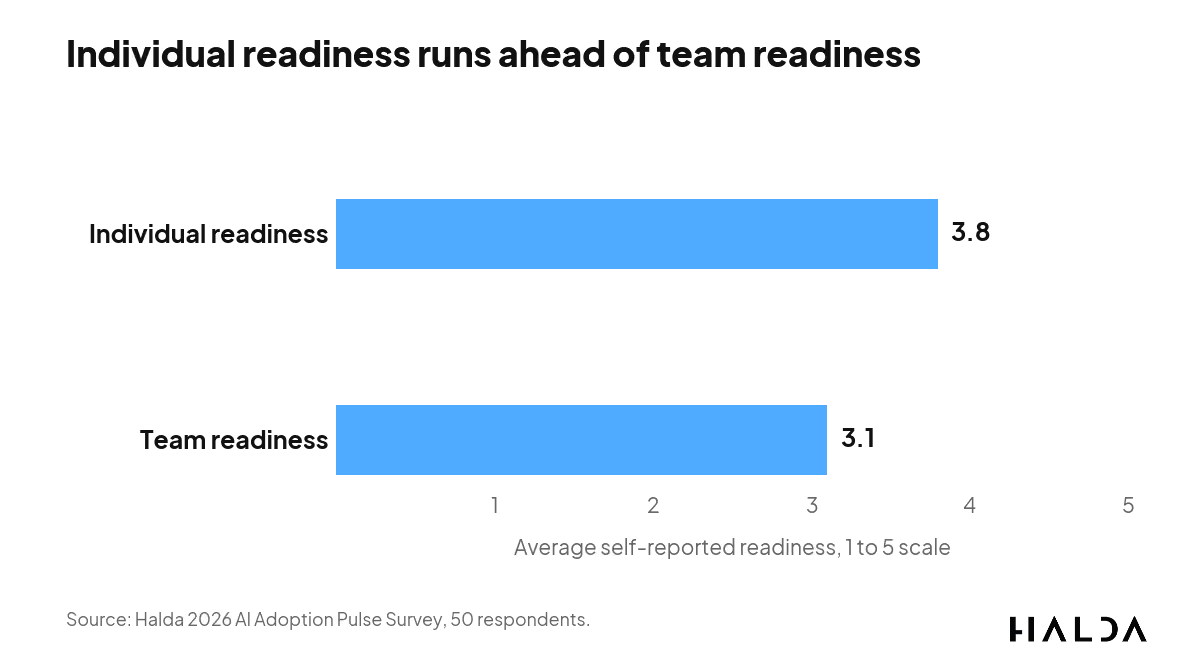
- Individual readiness (3.8 out of 5) still runs well ahead of team readiness (3.1 out of 5).
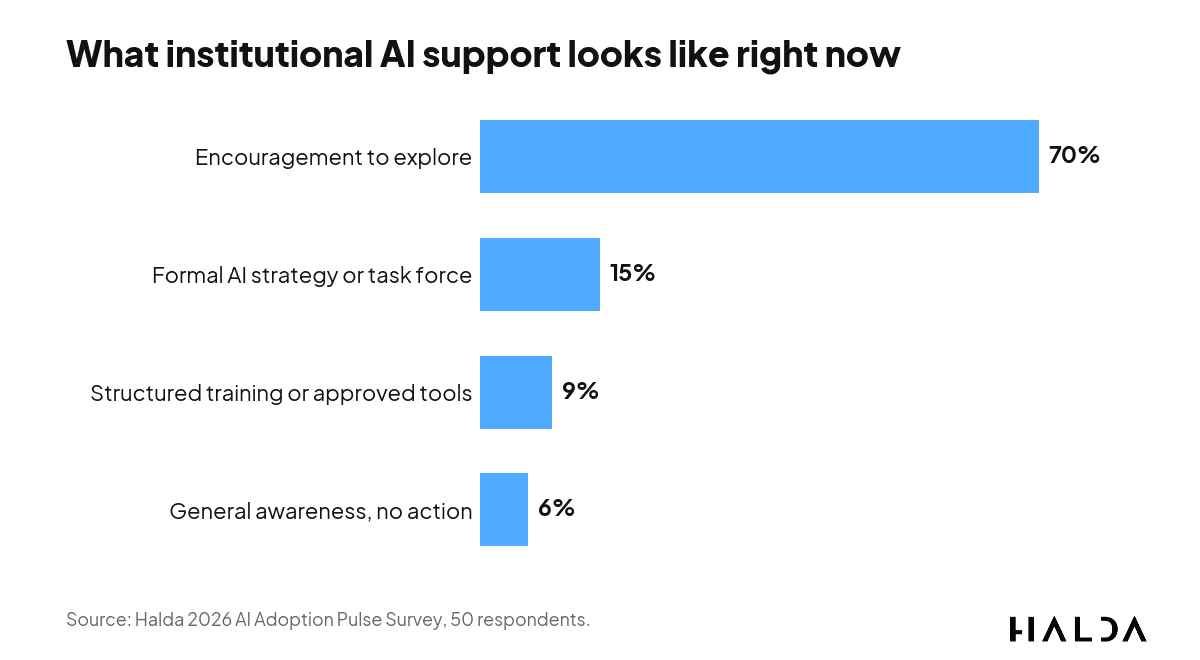
- 70% describe their institution's AI support as "encouragement to explore." Only 15% have a formal AI strategy or task force.
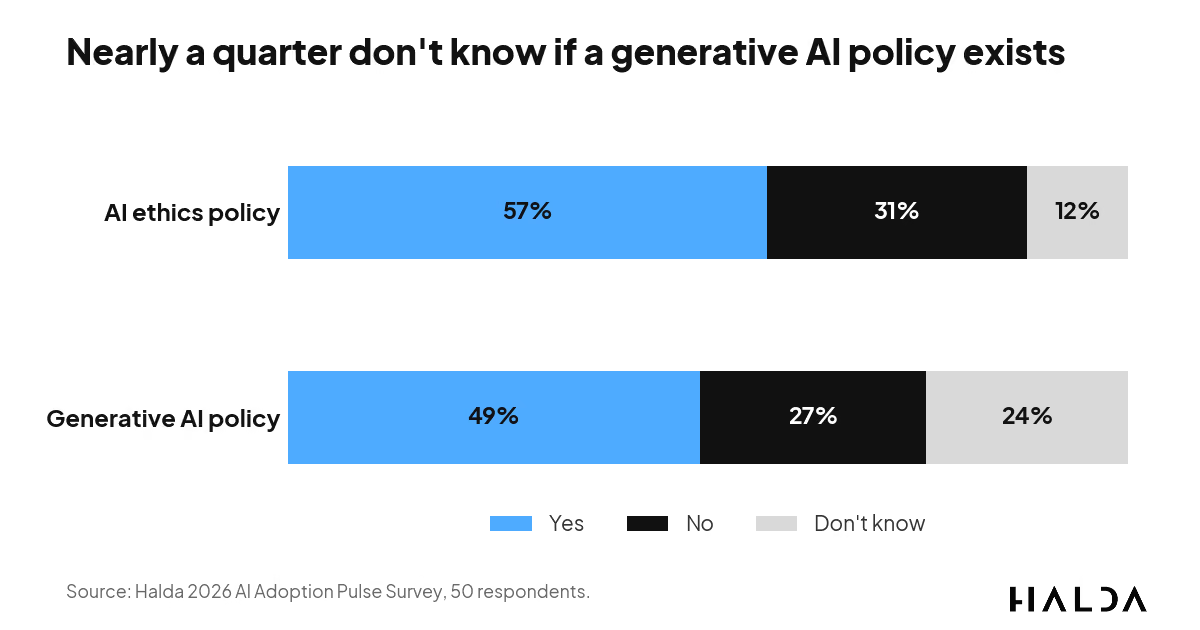
- Nearly a quarter of respondents (24%) don't know whether their institution even has a generative AI policy.
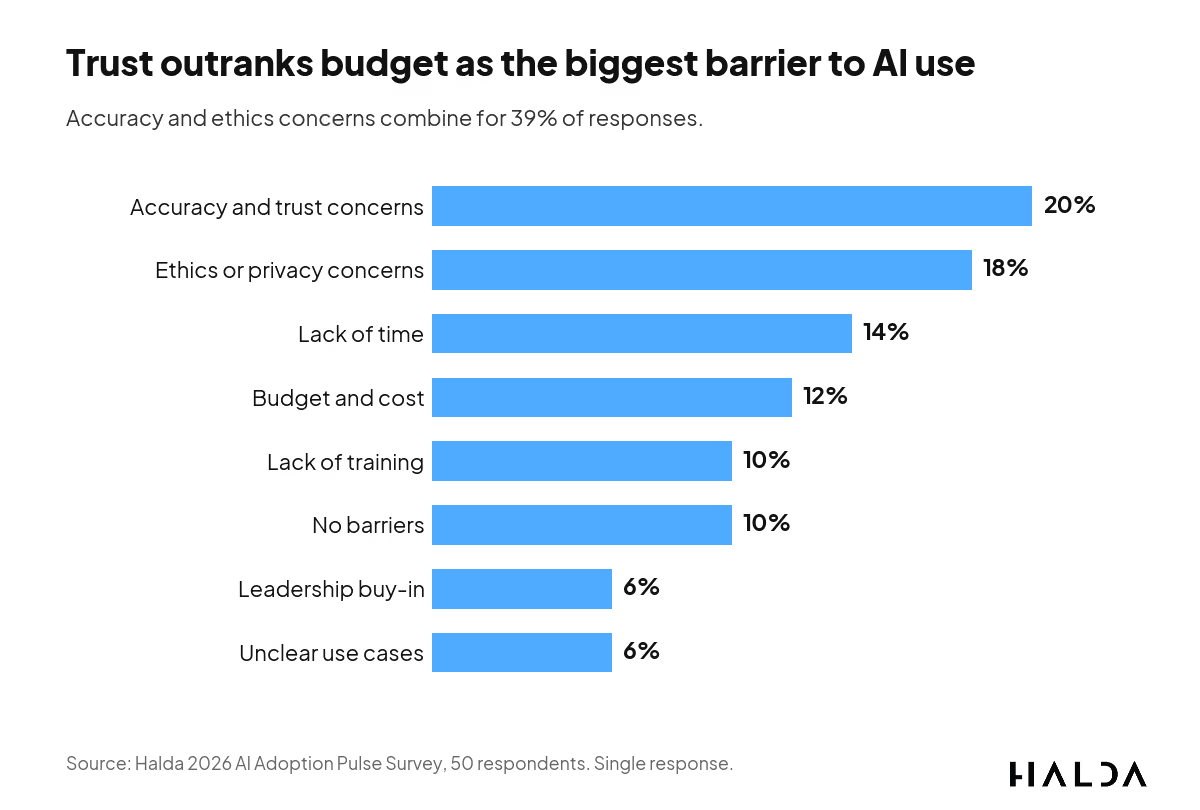
- Accuracy and trust concerns, plus ethics and privacy concerns, are the single biggest barrier for 39% of respondents. Budget and cost trail at 12%.
- 53% say AI has saved them some time this year. 10% call the time savings significant, and 8% say it's added work.
AI use looks like a habit now, not an experiment
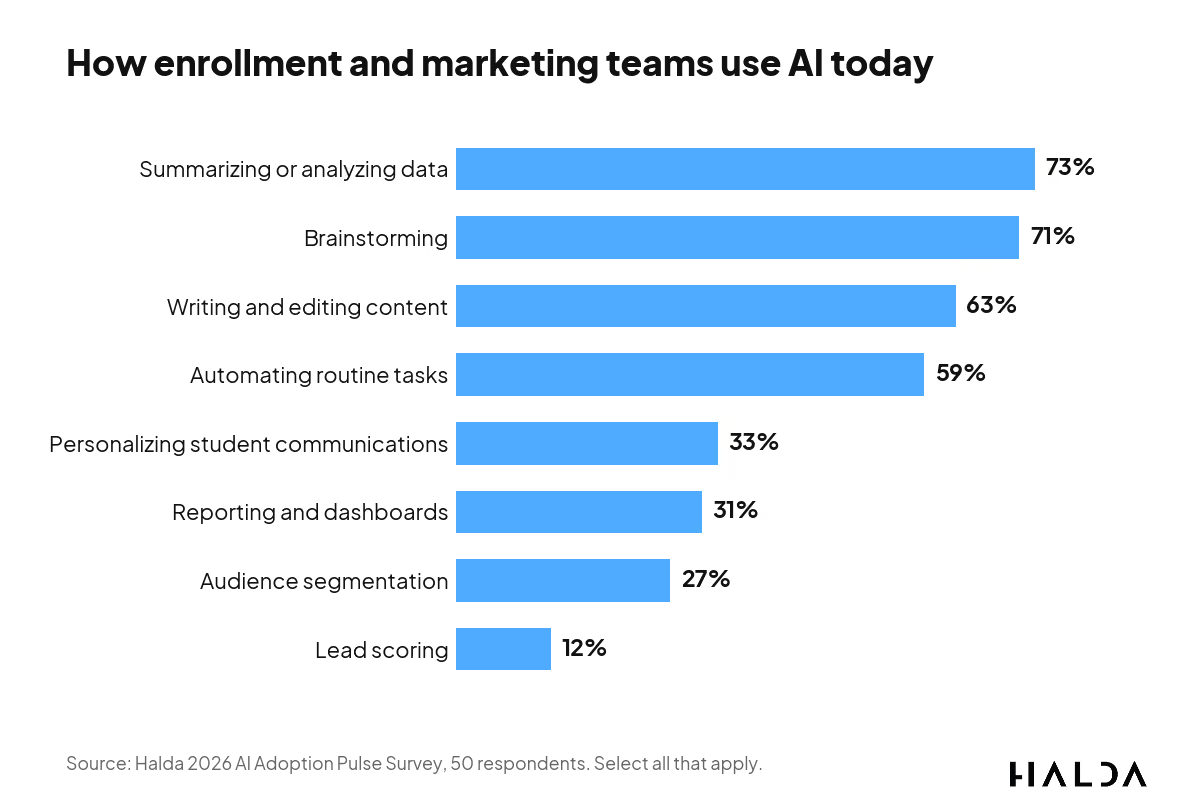
The most common uses of AI in enrollment and marketing work aren't novelty tasks anymore. They're the daily grind: summarizing or analyzing data (73%), brainstorming (71%), writing and editing content (63%) and automating routine tasks (59%). Personalizing student communications sits lower at 33%, which tracks: that use case takes more setup than opening a chat window to draft an email.
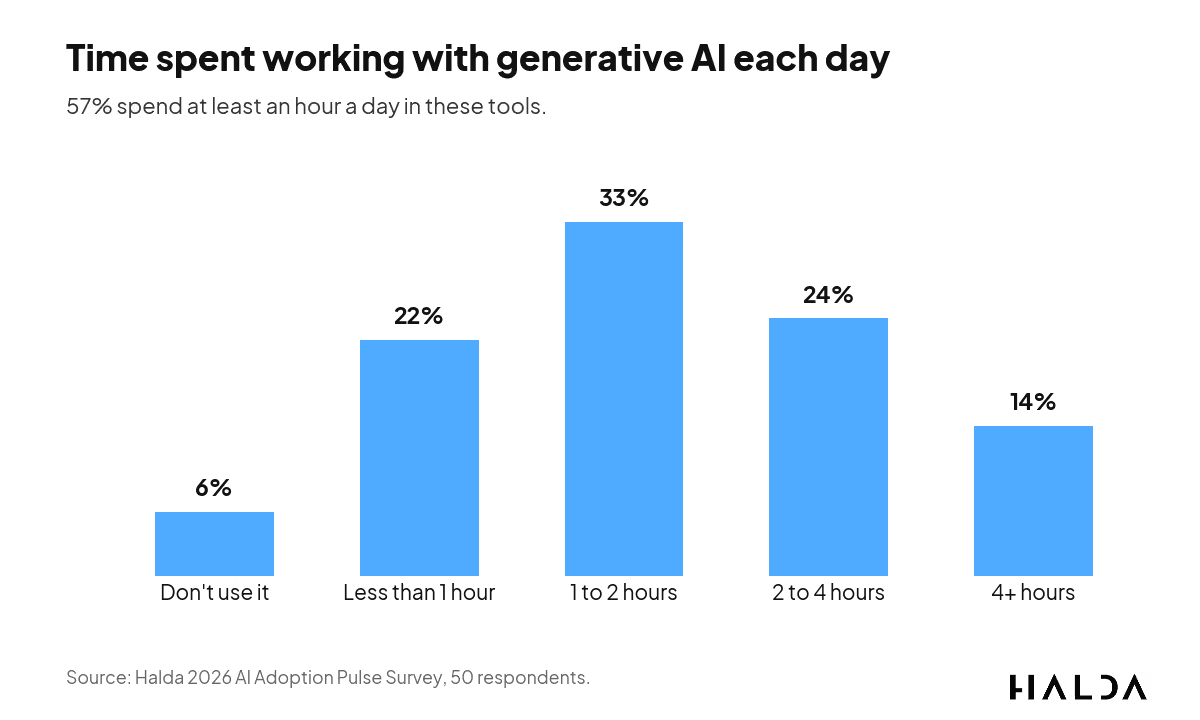
Time spent backs this up. 57% spend at least an hour a day working with generative AI tools, and only 6% say they don't use it at all. Two-thirds (67%) say their use has grown over the past year, and 71% expect to keep increasing it over the next 12 months. Whatever hesitation existed a year ago, it's fading fast for individuals.
Individual readiness is still miles ahead of team readiness
Ask people how ready they personally feel to use AI and the average answer is 3.8 out of 5. Ask about their team and it drops to 3.1. That difference shows up in almost every open-ended answer about what's holding teams back, and the reasons aren't really about the tools.
One respondent put it simply: "Honestly, they are younger (lol). But most importantly, their work is more aligned to using AI tools." Another was more pointed about the dynamic on their team: "Some teammates are skeptical and reluctant to introduce, feeling that they will lose control." A third described a split that has nothing to do with skill: "Some members of my team have enthusiastically embraced new AI tools... I'm still working through my moral objections to the product based on stealing others' intellectual property for their own use. But it is the future and will have to be embraced."
The individuals who are ready aren't waiting on their teams to catch up. But their teams are waiting on something else: time, training and proof it works, which is exactly what the next section covers.
"Encouragement to explore" isn't a strategy
70% of respondents describe their institution's current AI support as encouragement to explore on their own. Just 15% have a formal AI strategy or task force, and only 9% get structured training or approved tools.
Policy is murkier than the support numbers suggest. 57% say their institution has an AI ethics policy and 49% say the same for a generative AI policy specifically, but 12% and 24% respectively say they simply don't know. Almost a quarter of the people doing this work day to day can't say whether a generative AI policy exists at their own institution. That's not a policy problem so much as a communication one.
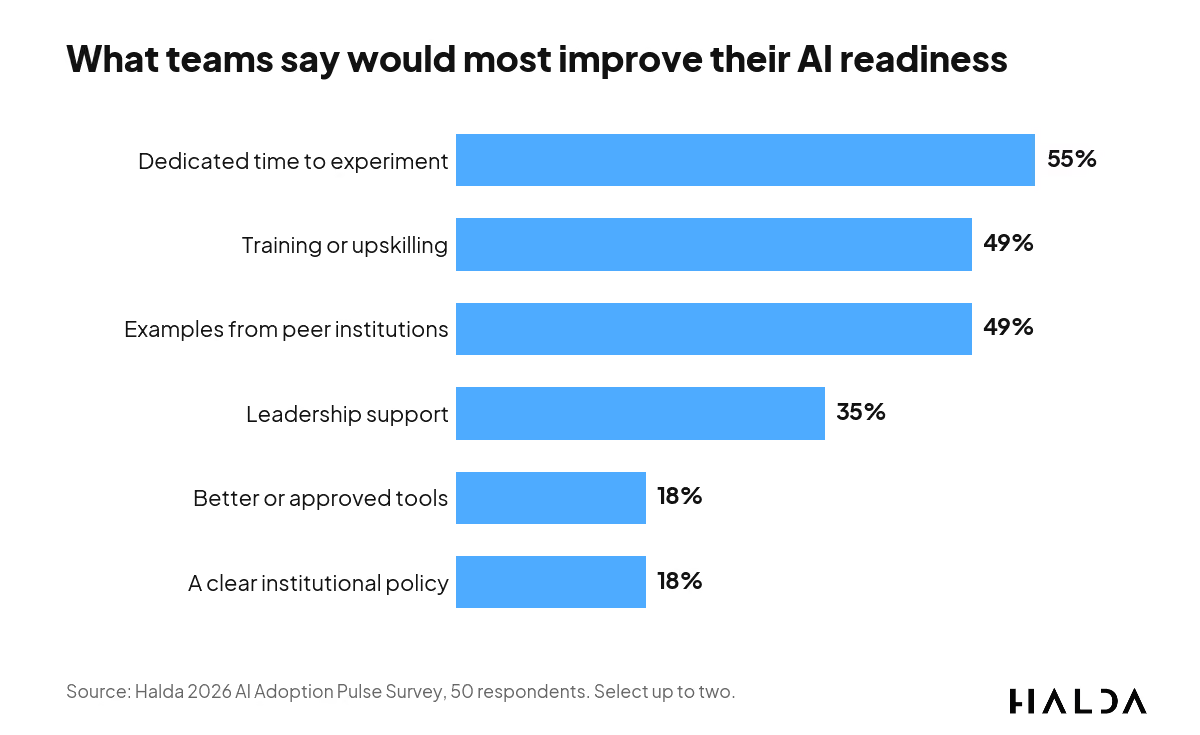
Ask people directly what would help and the answer isn't more encouragement. It's time: 55% want dedicated time to experiment, 49% want training or upskilling, and another 49% want to see what's actually working at peer institutions. Leadership support lands at 35%. A written policy, interestingly, ranks last at 18%, tied with better or approved tools.
The real barrier is trust, not budget
Accuracy and trust concerns (20%) and ethics or privacy concerns (18%) combine for 39% naming the single biggest barrier to using AI, well ahead of budget and cost (12%) and lack of time (14%).
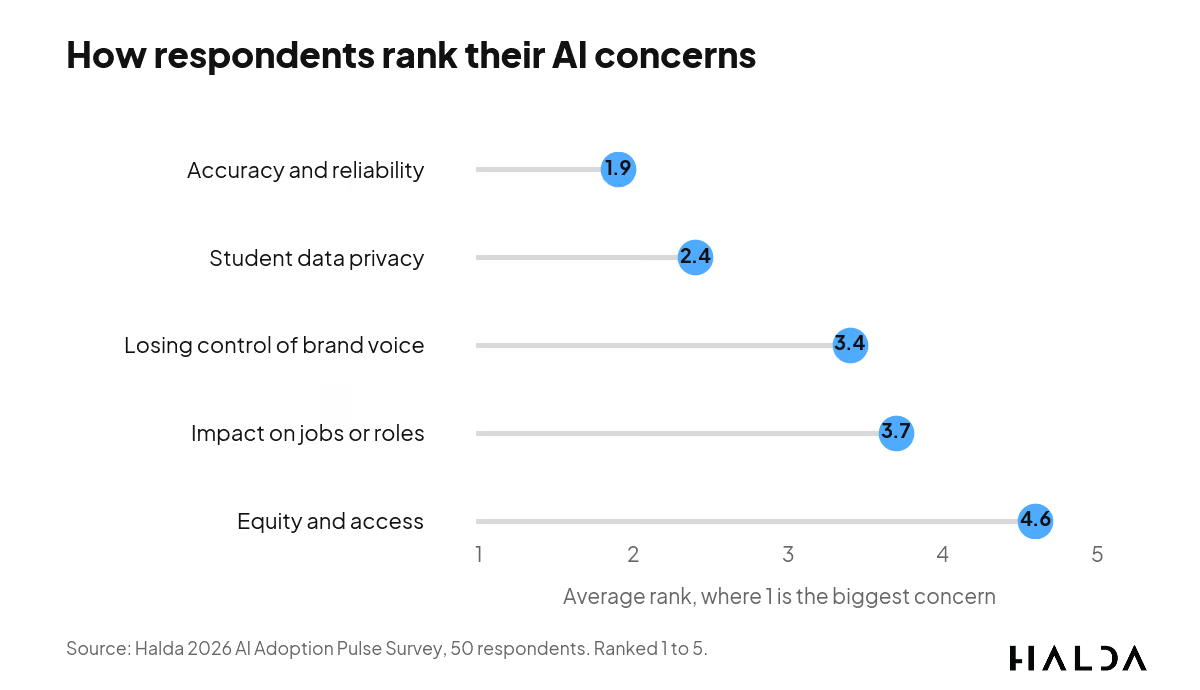
When we asked respondents to rank their concerns directly, the order held: accuracy and reliability came out on top, followed by student data privacy, then losing control of brand voice, then impact on jobs or roles, then equity and access. Only 12% ranked "I don't have major concerns" as their top pick, which means the large majority of this audience holds at least one genuine reservation about AI, even the people who use it every day.
Some of the most unexpected concerns weren't about the tool at all. One respondent said: "The environmental concerns really do not allow for me to feel more excited about using AI." Another, asked what would help them feel more confident, wrote: "Only the knowledge that using AI would not replace a human in any role, nor utilize resources that were once available to a rural community, nor be trained on plagiarized work to hallucinate 'facts' would convince me that using AI is okay." Environmental cost and training-data ethics barely registered as themes a year ago. They're showing up unprompted now, from people already using these tools daily. We wrote last year about the personas enrollment leaders run into when introducing AI, and this is a live example of one in the wild.
Efficiency is still an unclaimed prize
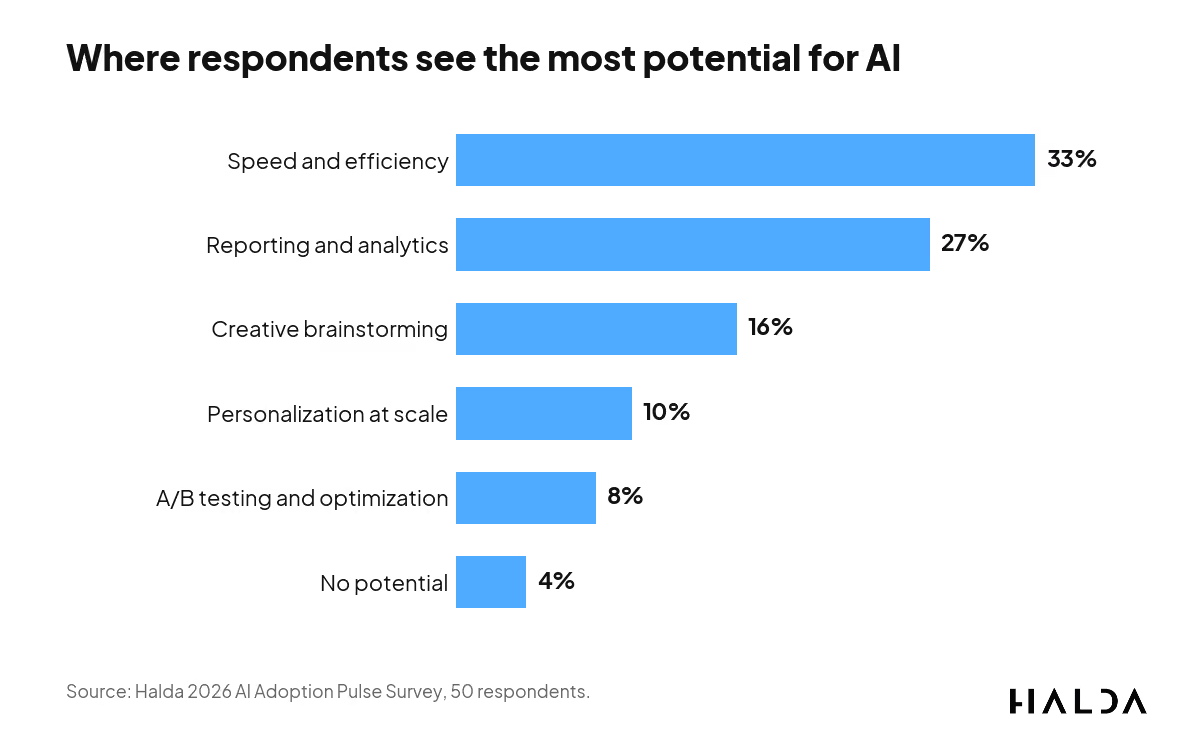
When we asked where people see the most potential for AI, speed and efficiency topped the list at 33%, ahead of reporting and analytics (27%) and creative brainstorming (16%).
But actual time saved tells a more modest story. 53% say AI has saved them some time this year. Only 10% call it a significant amount, 29% say they've seen no noticeable change, and 8% say it's added work instead.
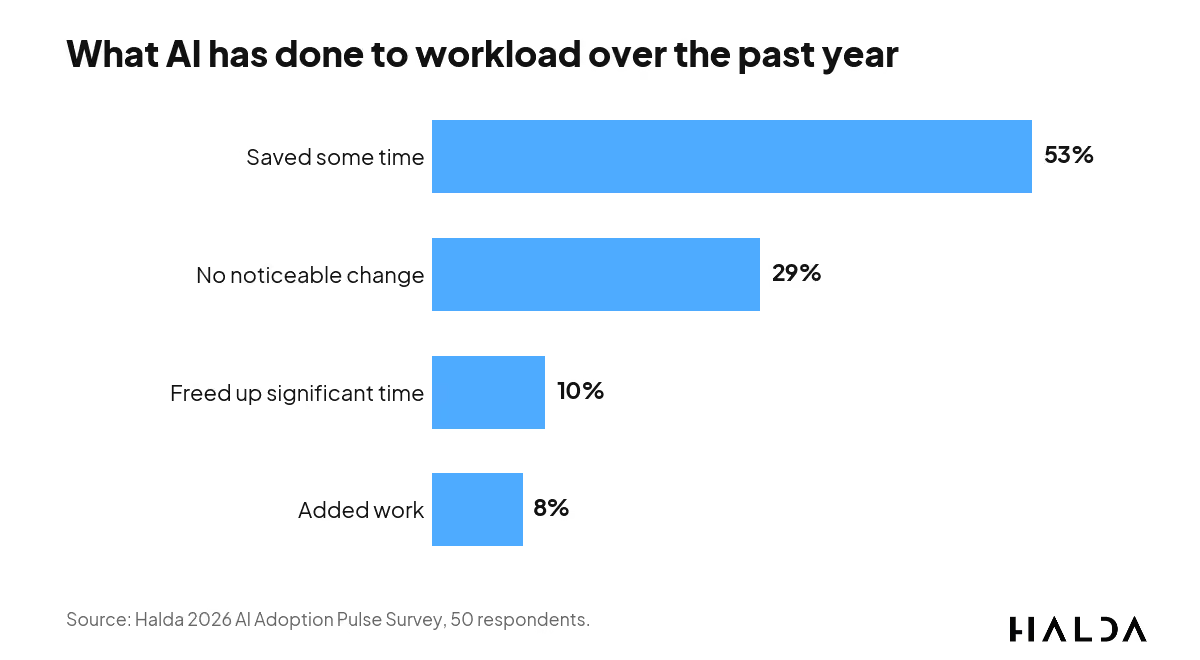
Where people see the most potential (efficiency, at scale) and where they're actually spending AI time (writing, brainstorming, one email at a time) still don't line up, and that difference shows up again in the workload numbers. Individual wins are there, but they haven't turned into team-level time back yet.
In their own words
Beyond the concerns, there were real wins. One respondent described stepping in on deadline: "I used AI to rewrite a recruitment brochure when leadership told us at the 11th hour that it needed to change. My associate director who normally does the writing was out of the office for the week and I didn't have time to wait. The end result was something I was proud of and that leadership was impressed with."
Another framed the moment less as a tool rollout and more as a culture shift already underway: "Normalizing it. Standardizing it. Professionalizing it." That's arguably the whole report in three words.
What this means for enrollment leaders
Three moves stand out from this data:
- Give people time, not just permission. "Encouragement to explore" was the most common form of support and the least requested one. Dedicated time to experiment beat every other ask, including leadership support and better tools. If your AI strategy is a green light and nothing else, you already have the buy-in. Now fund the hours.
- Let your high-impact practitioners run the training. The respondent who rewrote a brochure under deadline pressure, the one who called for "peer institution examples" as a top ask: they're describing the same fix. People trust proof from someone doing their job, not a policy memo. Find who's already good at this internally and put them in front of the team.
- Answer the trust question before it goes unanswered. Accuracy and privacy concerns beat budget as the top barrier, and nearly a quarter of respondents don't know if a generative AI policy even exists at their institution. That's a fixable, unglamorous problem: write the policy, then tell people it exists.
- Get comfortable with a little discomfort. Accuracy topped the list of concerns in this survey, and it's a fair one to have. But a lot of institutions are holding AI to a standard nobody applies to a new employee's first month on the job: perfection. Humans make mistakes while they learn a role, and AI does too. The institutions pulling ahead aren't waiting for an error-proof version to show up. They built a review step, accepted some friction as the cost of moving faster and got comfortable working with a tool that's good most of the time instead of perfect all of the time.
Join the conversation
We'll be hosting a webinar on Tuesday, September 15, at 2 p.m. EST, to walk through these findings in more depth and talk through what "give people time, not just permission" looks like in practice. Save your seat here.
________________
As Halda’s Head of Marketing, Angela Brown brings more than 15 years of experience leading marketing and content teams in education and B2B SaaS. When she isn’t at her computer, you can find her reading, watching a true crime documentary, or driving her son to basketball practice.